
The real challenge is choosing a modem that will still be the right choice five or ten years from now.
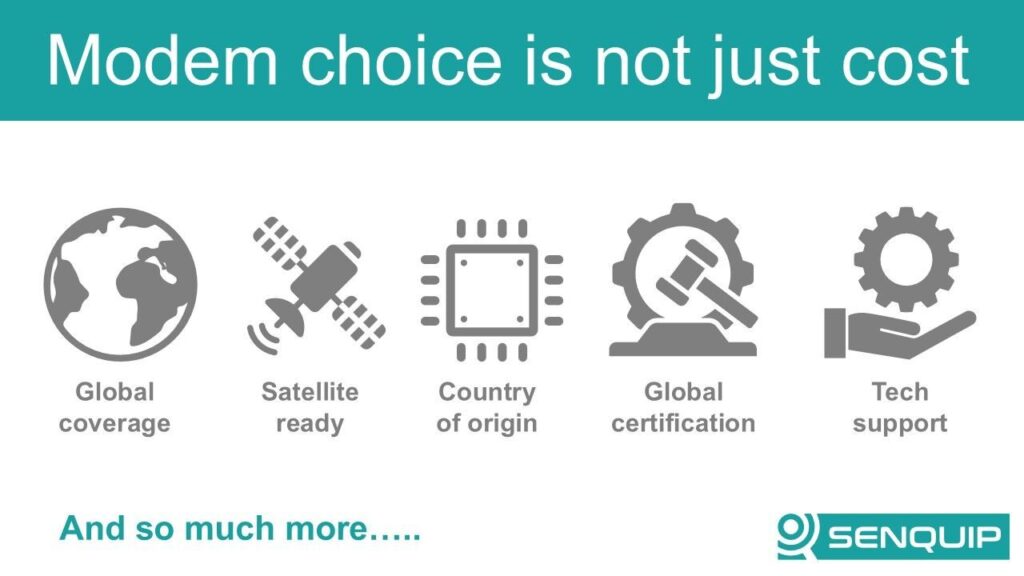
When developing our latest products, these were some of the factors we considered:
• Global coverage
• Direct-to-Cell satellite readiness
• Silicon origin
• Global certification
• Technical support
• Long-term availability
• Supply chain resilience
• Power consumption
• Cost
The outcome was two different modem choices.
𝐎𝐑𝐁 and 𝐐𝐔𝐀𝐃 use a modem supporting 2G, 3G, 4G Cat-1 and Direct-to-Cell satellite. They are intended for customers deploying equipment almost anywhere in the world, including regions where legacy networks are still important.
𝐔𝐍𝐈 uses 4G Cat-1 bis with Direct-to-Cell satellite. For high-volume OEM applications, it provides an excellent balance of cost, power consumption and performance, while remaining ready for emerging satellite services.
Our next-generation products had to be global. One SKU for the whole world. That means simpler logistics, easier distribution and, most importantly, the same trusted hardware wherever our customers operate.
Satellite wasn’t optional. Every next-generation product needed to support today’s cellular networks and tomorrow’s Direct-to-Cell satellite services.
Supply chain confidence is becoming increasingly important as organisations place greater emphasis on cybersecurity and technology provenance. That’s why we chose a modem with a USA-designed chipset.
So many competing priorities, and there is rarely a perfect answer.