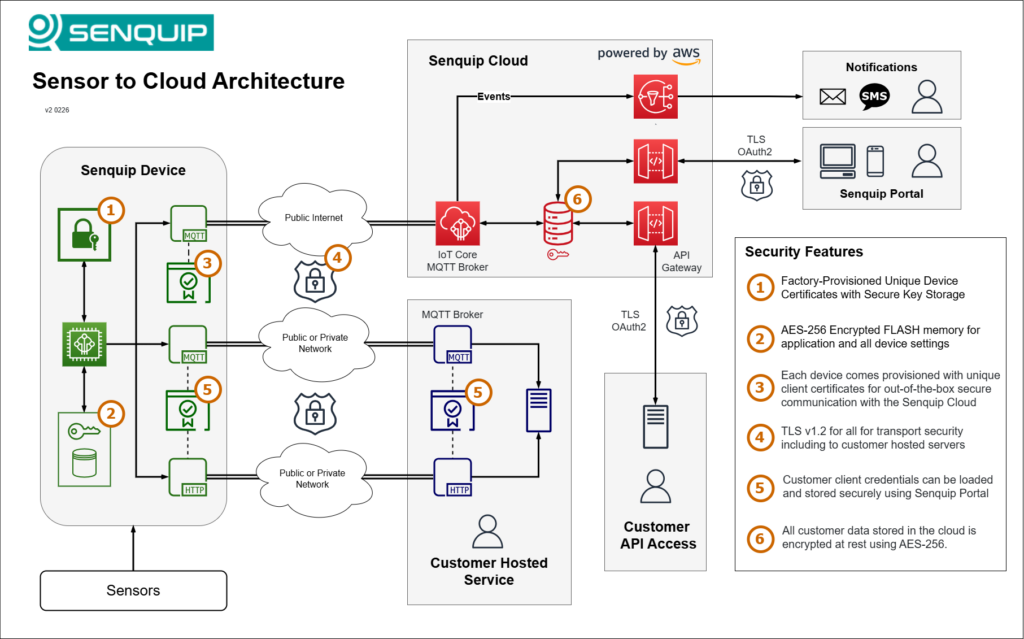
MQTT security is a key consideration when building remote monitoring systems for pumps, generators, and industrial equipment.
Senquip devices allow you to connect directly to your own third-party MQTT endpoint.
So if you want to run your own broker and manage your own infrastructure — you can.
However, production-grade security is not just about turning on TLS.
For example, once you implement mutual TLS (mTLS), you take on responsibility for:
• issuing a unique certificate for every device
• handling private keys securely
• configuring trust on the broker
• renewing certificates before expiry
• revoking compromised devices
• maintaining audit and lifecycle processes
As a result, certificate management quickly becomes a system in its own right.
At fleet scale, this requires process, governance, and security discipline.
These are the hidden costs of running your own MQTT infrastructure.
For a more detailed breakdown of these considerations, see our MQTT security application note.
Instead, many deployments choose a simpler architecture:
1️⃣ Devices publish securely to the Senquip Portal
2️⃣ Certificate management is handled centrally under our ISMS
3️⃣ Data is retrieved via the Senquip API for downstream integration
This approach reduces operational overhead while maintaining strong MQTT security.
You still retain full control of your data — without managing distributed device certificates.
Security is not just encryption.
It’s trust management.