Product reliability engineering isn’t just about designing new features. It’s about understanding why products fail and ensuring those failures don’t happen again.
When we began developing the next generation of Senquip products, we started with a simple question:
What was the root cause of every product return?
Our field return rate is approximately 0.4%, so there aren’t many products to investigate. That makes every return even more valuable.
Over the years, every returned device has been analysed, documented, and grouped into failure modes.
Some returns were genuine hardware failures.
Some were installation issues.
Others resulted from products being used in ways we had never anticipated.
One failure mode stood out above the rest.
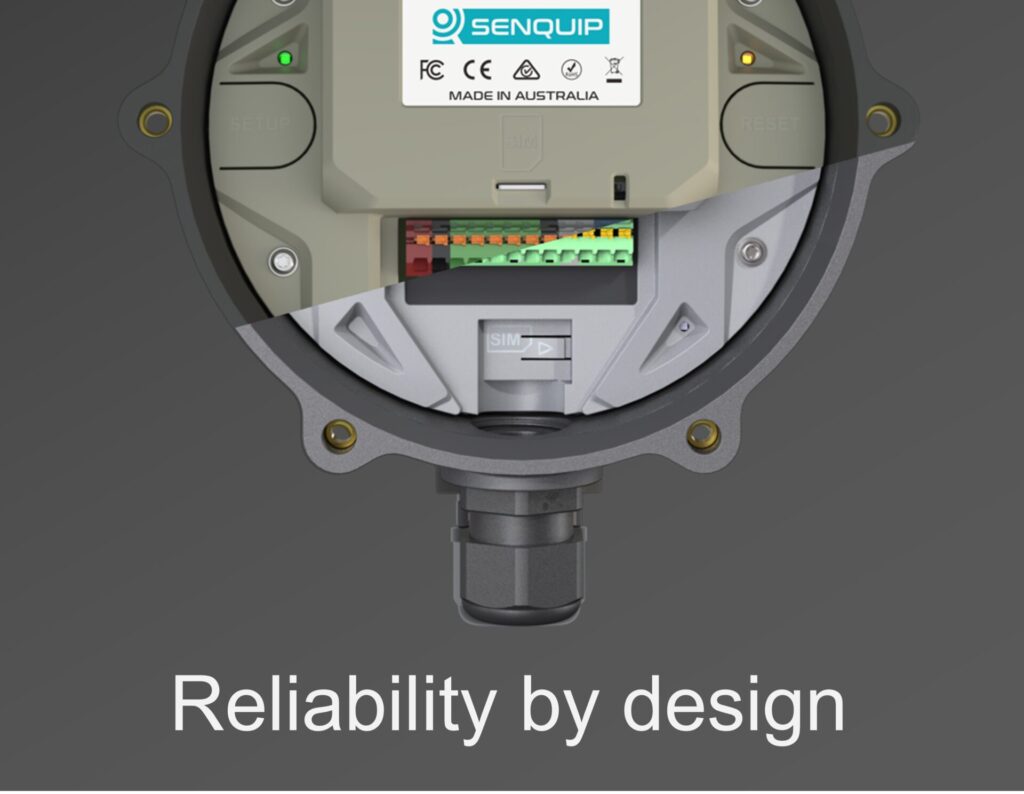
Eliminating SIM-Related Failures
The most common issue involved SIM card installation.
Our investigations identified three recurring causes:
- Alignment between the SIM holder and enclosure was critical.
- SIM card adapters could damage the connector contacts.
- Inserting a SIM after the product had been wired into a machine was awkward and increased the likelihood of mistakes.
The engineering objective became obvious:
Eliminate SIM-related failures as a failure mode.
Rather than asking users to be more careful, we redesigned the product to make the problem disappear.
We’re looking forward to introducing that solution in our next-generation products.
Designing Out Failure
We applied the same process to every identified failure mode.
Each one became an opportunity to improve the mechanical design, electronics, firmware, or user experience.
The goal isn’t simply to reduce failures.
It’s to eliminate their root causes wherever possible.
Our target for the next generation of products is a field return rate of 0.1%.
Because the best product improvements are often the ones customers never notice.
They’re the problems that quietly disappear.